
When looking at the ALIBARBAR INGOT 9000 flavour range, you may notice names such as Strawberry Watermelon, Strawberry Kiwi, Grape Ice, Mango Magic and Tobacco.
These names suggest different flavour profiles, but do they actually affect how the aerosol tastes and feels?
Yes. Different flavour formulations can change perceived sweetness, fruit aroma, cooling sensation and throat irritation. However, flavour names alone cannot tell us exactly how a product will feel or whether it is safe.
This article examines the science behind flavour perception, using ALIBARBAR flavour names as examples, and explains why two devices with similar specifications may still produce different sensory experiences.
1. Why Do Different ALIBARBAR Flavours Taste Different?
The main reason is the chemical composition of flavouring ingredients.
Electronic vaping liquids may contain flavouring compounds that produce particular aromas when heated and carried in an aerosol.
For example, a product labelled Strawberry Watermelon is intended to suggest a combination of strawberry and watermelon aromas. A product labelled Tobacco is intended to suggest a tobacco-like flavour profile.
These descriptions do not mean the liquids contain actual fruit or tobacco extracts.
Human flavour perception involves several senses working together:
Taste: Basic sensations such as sweetness, bitterness and sourness.
Smell: Aromatic compounds detected through the nose and retronasal olfaction.
Trigeminal sensation: Cooling, warming and irritation experienced in the mouth, nose and throat.
As a result, two flavour formulations may produce noticeably different sensations even when used in otherwise similar devices.
2. ALIBARBAR Flavour Names and Their Expected Profiles
The following table describes the flavour concepts suggested by several ALIBARBAR INGOT 9000 names.
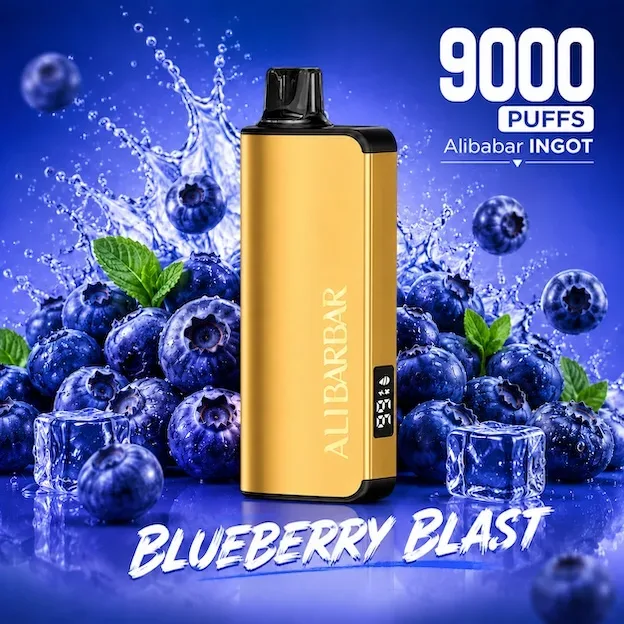
Flavour nameIntended flavour conceptPotential sensory characteristicsStrawberry WatermelonStrawberry and watermelonFruity aroma and perceived sweetnessStrawberry KiwiStrawberry and kiwiBerry aroma with a tart-fruit associationBlueberry BlastBlueberryBerry-like aromatic profileMango MagicMangoTropical fruit aromaGrape IceGrape with coolingGrape aroma and potential cooling sensationTobaccoTobacco-likeTobacco-associated aromaThese are interpretations of product names, not verified sensory-test results. Actual flavour perception depends on the ingredients, their concentrations and the conditions under which the aerosol is generated.
3. Does an “Ice” Flavour Actually Feel Colder?
Flavour names containing the word “Ice” usually suggest a cooling sensation.
In vaping products generally, this sensation may be produced by menthol or other cooling agents that activate cold-sensitive sensory receptors.
Importantly, a cooling sensation does not necessarily mean that the aerosol is physically colder.
Cooling ingredients may also change how irritation is perceived. In some formulations, cooling sensations can mask aspects of nicotine-related harshness.
Research published in Tobacco Control has examined synthetic cooling agents in e-cigarette products and highlighted important uncertainties about the health effects of inhaling these substances.
Therefore, a cooling sensation should not be interpreted as evidence that a product is less irritating or safer.
4. Why Can Two Flavours Have Different Throat Sensations?
Throat sensation is influenced by more than flavour alone.
Several factors may contribute:
Nicotine concentration
Nicotine can contribute to irritation and the sensation sometimes described as a throat hit.
Products with different nicotine concentrations may produce different sensations even when their flavour names are similar.
Flavouring ingredients
Certain flavouring compounds can produce distinct sensory effects, including irritation.
The concentration and combination of ingredients matter, and a pleasant smell does not establish inhalation safety.
Propylene glycol and glycerol
These common aerosol-forming ingredients influence the physical characteristics of the liquid and aerosol.
Their relative proportions can affect aerosol generation and sensory perception.
Device operating conditions
Heating-element temperature, electrical power and liquid delivery can influence aerosol composition.
This means a change in perceived taste does not always indicate a change in flavour formulation.
5. Can the Same ALIBARBAR Flavour Taste Different Over Time?
Yes. A person's perception of the same flavour can change, even without a deliberate change in the product formulation.
Several possible explanations include:
Sensory adaptation: Repeated exposure to a particular aroma may temporarily reduce how strongly it is perceived.
Changes in device condition: Heating-element condition and liquid delivery may influence the aerosol being generated.
Individual factors: Temporary changes in smell sensitivity, nasal congestion or other personal factors can alter flavour perception.
Product variation: Differences between manufacturing batches or storage conditions may affect product characteristics, although such changes cannot be established without testing.
If a device develops a burnt smell, unusual taste, leakage or excessive heat, stop using it. Do not attempt to dismantle a sealed device to investigate the problem.
6. Does a Sweeter Flavour Mean More Sugar?
Not necessarily.
A flavour that seems sweet does not automatically contain a high concentration of sugar.
Perceived sweetness can arise from flavouring compounds and the interaction between aroma and taste.
A fruit-related name also does not establish that real fruit juice or natural fruit ingredients are present.
The only reliable way to determine which ingredients a product contains is to examine accurate formulation records or verified ingredient documentation.
7. Are Some ALIBARBAR Flavours Safer Than Others?
There is insufficient evidence to conclude that one named ALIBARBAR flavour is safer than another simply because of its taste or aroma.
Different flavouring formulations can contain different chemical substances, and ingredients considered suitable for eating are not necessarily safe to inhale after heating.
Product safety assessments require information about ingredient identity, concentration, aerosol chemistry and potential toxicological effects.
A smoother or less irritating sensation should never be treated as proof of lower health risk.
8. What Australian Consumers Should Know About Flavour Regulations
Australia has strict rules governing the supply of vaping products.
Under current Therapeutic Goods Administration requirements, therapeutic vaping substances are limited to permitted flavour categories, including mint, menthol and tobacco, alongside unflavoured formulations.
Fruit and confectionery flavour combinations are not permitted for lawful therapeutic vape supply under the relevant product standards.
Australian law also restricts the supply and advertising of vaping goods, with lawful therapeutic supply generally occurring through pharmacies subject to applicable requirements.
Consequently, the flavour names discussed in this article are included for product identification and technical explanation, not as recommendations or indications that these products may legally be supplied in Australia.
Frequently Asked Questions
Do different ALIBARBAR flavours produce different tastes?
Different flavour formulations can produce different aromas, perceived sweetness and other sensory characteristics. However, the actual differences cannot be confirmed from flavour names alone.
Why does an Ice flavour feel cold?
Cooling agents can activate sensory receptors associated with cold sensations. This does not necessarily indicate a lower aerosol temperature.
Can two ALIBARBAR flavours have different throat sensations?
Yes. Flavouring ingredients, nicotine concentration, aerosol composition and device conditions can influence perceived irritation.
Why does the same flavour sometimes taste weaker?
Sensory adaptation, individual smell sensitivity, device condition and changes in aerosol generation may contribute.
Does a sweet flavour contain real sugar?
Not necessarily. Perceived sweetness does not establish the presence of sugar or natural fruit ingredients.
Is a smoother flavour safer?
No. A less irritating sensation is not reliable evidence of lower toxicological risk.
Are fruit-flavoured ALIBARBAR products permitted for supply in Australia?
Fruit-flavoured vaping substances do not meet the current Australian therapeutic vaping flavour restrictions. Lawful supply is subject to the applicable federal and state or territory requirements.
Conclusion
Different ALIBARBAR flavour formulations can influence perceived taste, aroma, sweetness, cooling sensation and throat irritation.
However, flavour names are only descriptive labels. They do not reveal the full ingredient composition, predict every individual's experience or establish product safety.
Understanding the relationship between flavour chemistry, sensory perception and device operating conditions provides a more accurate explanation of why vaping products with different flavour names may feel different.
For Australian readers, it is equally important to understand the country's restrictions on vaping products and permitted flavour formulations.
Disclaimer: This article is provided for general educational purposes. It does not endorse vaping products, recommend particular flavours or establish the safety of any ALIBARBAR product.