
Introduction
When an ALIBARBAR 9000 stops producing vapour, it can be difficult to identify the cause immediately. The device may appear normal on the outside, yet an internal battery issue, an airflow problem or a component fault may prevent it from operating as expected.
If your ALIBARBAR 9000 is not producing vapour, the first step is to recognise the symptoms without attempting to dismantle or repair the device.
This guide explains several possible causes, how to recognise warning signs and when to stop using the device and seek appropriate assistance.
1. The Battery May Be Depleted or Faulty
A battery supplies the electrical energy required for the device's heating system to operate. If the battery is depleted, damaged or unable to deliver power correctly, the device may stop producing vapour.
Possible signs include:
The device does not respond when activated.
The display or indicator does not illuminate.
The battery indicator shows an unusual reading.
The device stops responding unexpectedly.
An indicator alone cannot confirm that the battery is functioning correctly. If the device has a rechargeable battery, follow the manufacturer's instructions and use only the specified charging equipment. Do not charge a device that is damaged, leaking, swollen or unusually hot.
2. The Airflow Sensor May Not Be Detecting Activation
Some electronic vaping devices use an automatic airflow sensor to detect inhalation and activate the heating system.
If the sensor or its associated circuitry develops a fault, the device may fail to activate even when the battery appears to have power.
Dust, debris, liquid ingress or internal damage may affect electronic components. However, it is not possible to identify a sensor fault from the absence of vapour alone.
Do not insert sharp objects into the mouthpiece or airflow openings, and do not open the casing to inspect internal components.
3. An Internal Heating Component May Have Failed
A vaping device requires its heating element and associated electrical circuitry to operate correctly.
If a heating element, electrical connection or control circuit fails, the device may stop producing vapour despite showing signs of power.
Potential warning signs include:
The device activates but produces no visible vapour.
The device behaves inconsistently.
The device develops an unusual smell.
The device becomes abnormally hot.
These symptoms do not establish a particular internal fault. A sealed disposable device should not be dismantled or repaired by the user. Stop using it if a component failure is suspected.
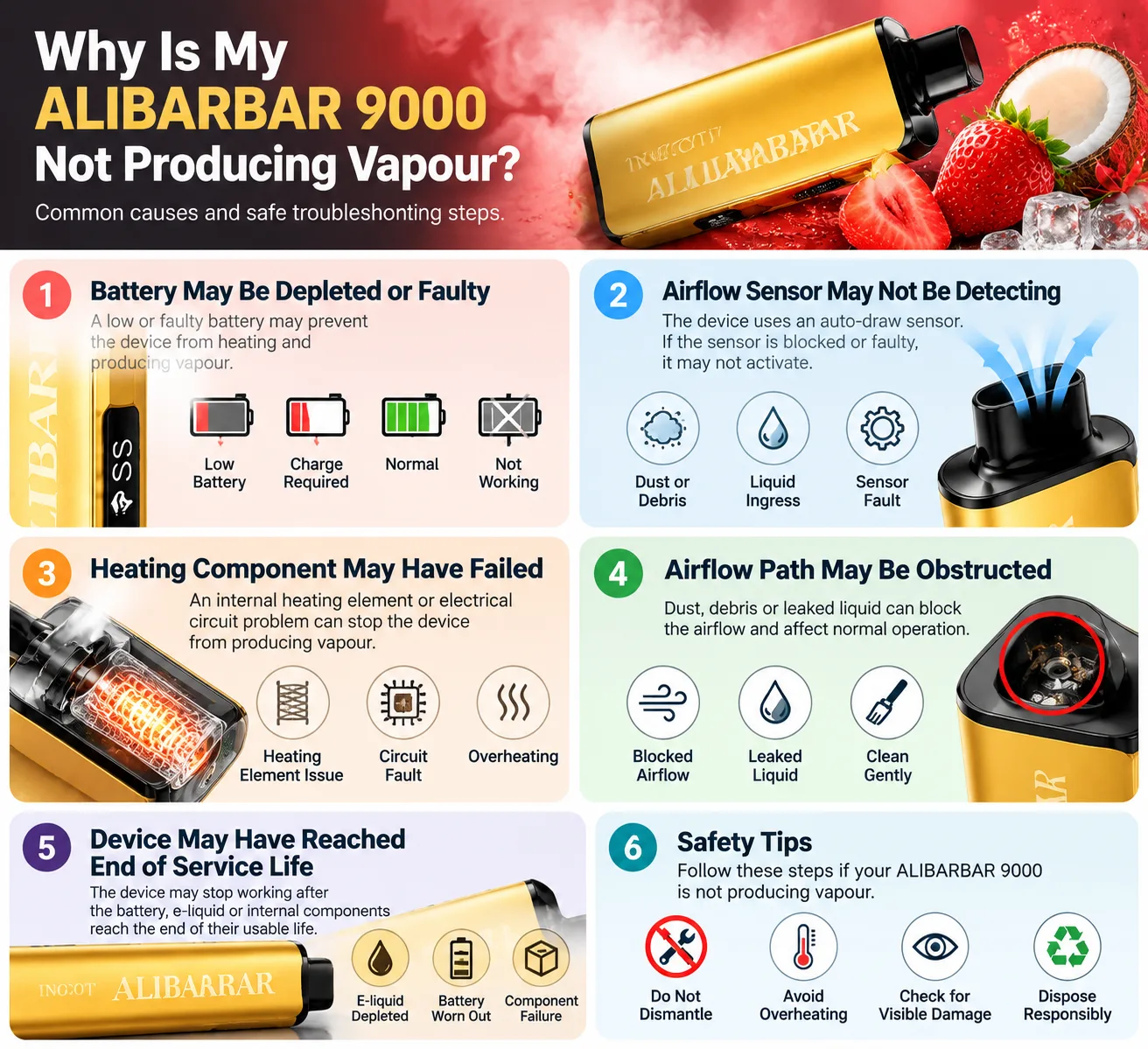
4. The Airflow Path May Be Obstructed
An obstruction in the airflow path can interfere with the normal movement of air through a device.
Dust, debris or leaked liquid may contribute to an airflow problem. A device that feels unusually difficult to draw through may have an obstruction or another mechanical issue.
If the exterior is visibly dirty, clean only the accessible external surfaces in accordance with the manufacturer's instructions. Do not pour water into the device, insert tools into its openings or attempt to disassemble it.
If the airflow remains restricted, stop using the device and seek guidance from the manufacturer or an appropriate service provider.
5. The Device May Have Reached the End of Its Service Life
A device may stop operating after its battery, liquid supply or another internal component reaches the end of its usable life.
An advertised puff count is an estimate under particular testing conditions, not a guarantee that every device will produce that number of puffs.
A device may also stop working before reaching its advertised maximum because of differences in operating conditions, battery performance or component failure.
Do not attempt to refill a sealed device, replace its internal battery or bypass its electrical protections unless the product is specifically designed for such servicing and the manufacturer provides appropriate instructions.
6. What Should You Do If Your ALIBARBAR 9000 Stops Working?
If the device produces no vapour, follow these general safety steps:
Stop using the device temporarily. Avoid repeated activation attempts when the cause is unknown.
Inspect the exterior. Look for cracks, leakage, swelling, unusual heat or visible damage without opening the casing.
Check the supplied instructions. Confirm the meaning of any displayed symbols or indicator lights.
Avoid improvised repairs. Do not dismantle the device, puncture its battery or insert objects into the airflow path.
Seek appropriate assistance. Contact the manufacturer or relevant supplier for guidance if the device remains unresponsive.
Arrange suitable disposal if necessary. In Australia, disposable vapes should not be placed in household rubbish or kerbside recycling bins. Check with your local council or a collection facility that explicitly accepts complete vapes.
If the device becomes unusually hot, swells, leaks or emits smoke, stop handling it unnecessarily and move away from the immediate area. If there is a fire or immediate danger, call Triple Zero (000) in Australia.
Frequently Asked Questions
Why is my ALIBARBAR 9000 not producing vapour even though the display works?
A working display does not prove that the battery, heating element, airflow sensor and control circuitry are all functioning correctly. An internal fault or another operating issue may be responsible.
Can a blocked airflow path stop a vape from producing vapour?
Yes, an obstruction can interfere with airflow and normal operation. However, the absence of vapour alone cannot confirm that airflow is the cause.
Can a damaged battery cause an ALIBARBAR 9000 to stop working?
Yes. Battery depletion or damage may prevent normal operation. A damaged or unusually hot device should not be charged, dismantled or repeatedly activated.
Why might a device stop working before its advertised puff count?
Advertised puff counts are estimates rather than guaranteed results. Battery performance, operating conditions and component faults may affect actual service life.
Should I open my ALIBARBAR 9000 to repair it?
No. Do not dismantle a sealed disposable device or attempt to remove its internal battery. This can cause battery damage, electrical hazards and injury.
How should I dispose of a faulty disposable vape in Australia?
Check your local council's guidance or contact a waste collection facility that explicitly accepts complete disposable vapes with embedded batteries. Do not place the device in ordinary household rubbish or kerbside recycling.
Conclusion
An ALIBARBAR 9000 that is not producing vapour may have a depleted or faulty battery, an airflow problem, a sensor issue, a failed internal component or may have reached the end of its service life.
Because these devices contain electrical components and batteries, the safest approach is to avoid dismantling or attempting improvised repairs. Check the manufacturer's instructions, stop using any damaged device and seek appropriate guidance.
For Australian readers, responsible handling also includes arranging suitable disposal through a verified collection service when a disposable vape can no longer be used.
Disclaimer: This article provides general technical and safety information and does not establish a diagnosis for an individual device. Follow the applicable manufacturer's instructions and Australian waste-management guidance.