
The ALIBARBAR INGOT 9000 is a disposable vape model known in the Australian market. However, one issue that some users may encounter is a device that suddenly stops producing vapour, even when it appears to have battery power remaining.
If your ALIBARBAR INGOT 9000 is not working, several possible explanations are worth understanding. These include battery failure, airflow sensor problems, depleted e-liquid, internal coil faults and manufacturing defects.
In this guide, we'll examine the most common reasons an ALIBARBAR 9000 may stop producing vapour, explain how to recognise different symptoms and discuss when a device should no longer be used.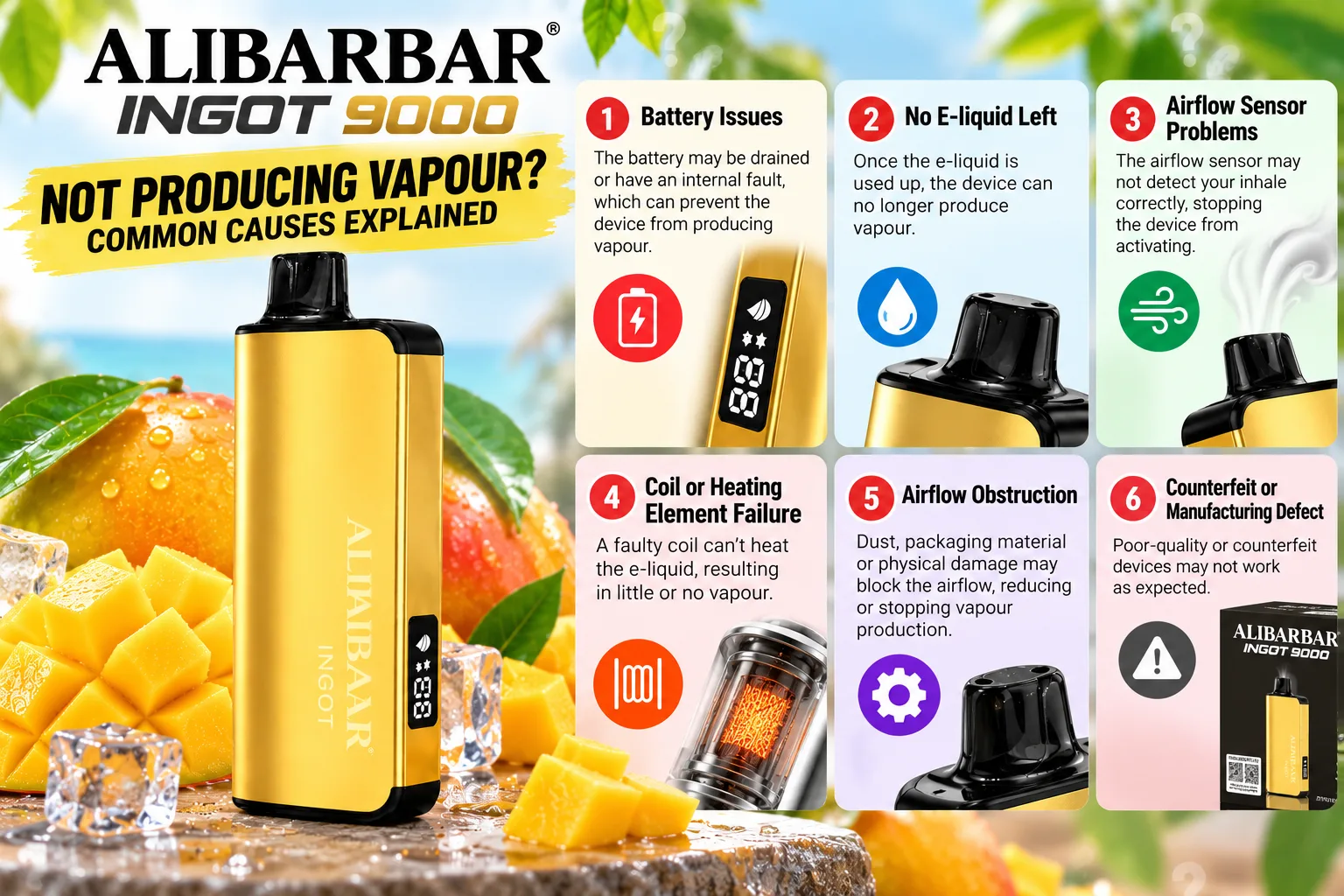
1. Battery Problems May Prevent Vapour Production
One possible reason an ALIBARBAR INGOT 9000 stops producing vapour is a battery-related problem.
Disposable vape devices rely on an internal battery to supply electrical power to the heating element. If the battery can no longer provide sufficient power, the device may stop generating aerosol.
Common symptoms of battery-related problems include:
No response when inhaling.
An indicator that fails to illuminate.
An indicator that flashes without vapour production.
Intermittent operation before the device stops working.
The ALIBARBAR INGOT 9000 is commonly advertised with a 2350mAh battery, although published specifications should be verified against the particular product version.
A battery capacity rating does not guarantee that every device will operate for the same length of time.
Important: Do not attempt to open, modify, externally charge or repair a disposable device unless the manufacturer specifically provides a supported procedure. A damaged lithium battery may create a fire or injury risk.
2. The E-Liquid May Have Been Depleted
Another possible explanation for an ALIBARBAR 9000 producing little or no vapour is depleted e-liquid.
Disposable vapes contain a limited amount of liquid. Once the available liquid has been consumed, the heating element can no longer produce aerosol normally.
The ALIBARBAR INGOT 9000 is commonly listed with a 22mL e-liquid capacity, but the actual available quantity should be confirmed from reliable manufacturer documentation.
Signs associated with low or depleted e-liquid may include:
Vapour production gradually decreasing.
Changes in flavour intensity.
A dry or burnt taste.
The device stopping after an extended period of use.
A dry or burnt taste may indicate that the heating element is no longer receiving sufficient liquid.
If this occurs, discontinue use rather than continuing to activate the device.
3. Airflow Sensor Problems
Many disposable vape devices use an automatic draw-activation system.
Instead of requiring a separate power button, the device detects changes in airflow when the user inhales.
If the airflow sensor or its associated circuitry fails, the device may not activate correctly.
Possible symptoms include:
No activation when drawing.
Inconsistent activation.
The indicator responding without normal aerosol production.
The device unexpectedly stopping.
Airflow problems may result from manufacturing defects, internal condensation, physical damage or electronic faults.
Because the sensor is located inside the device, diagnosing or repairing it generally requires disassembly, which is not recommended for consumers.
4. Internal Coil or Heating Element Failure
The heating element is responsible for converting electrical energy into heat, allowing the e-liquid to form an aerosol.
The ALIBARBAR INGOT 9000 is commonly described as using mesh-coil technology.
Like other electronic heating components, a coil may fail because of manufacturing defects, electrical faults or deterioration.
A failed heating element may produce symptoms such as:
The device indicator operating normally without vapour.
Vapour production stopping suddenly.
Unusual changes in taste.
Inconsistent device performance.
A working indicator does not necessarily mean the heating element is functioning correctly.
If an internal coil fault is suspected, the safest approach is to stop using the device and seek guidance from the manufacturer or an authorised supplier.
5. Airflow Obstruction or Physical Damage
Airflow obstruction is another possible reason for reduced or absent vapour.
External openings may become blocked by packaging material, dust or other debris.
Physical damage can also affect internal airflow pathways or electronic components.
For a device that has never worked, it may be useful to check visually whether any manufacturer-supplied protective packaging remains attached.
Do not insert sharp objects into the mouthpiece or airflow openings. Avoid forcing air or liquid into the device, as this may damage internal components.
If the device has been dropped, crushed, exposed to water or otherwise damaged, discontinue use.
6. Why Does My ALIBARBAR 9000 Light Up but Produce No Vapour?
One frequently discussed problem is an ALIBARBAR 9000 that lights up but produces no vapour.
This symptom can be confusing because the indicator suggests that at least part of the electrical system is responding.
However, an illuminated indicator does not establish that the battery, control circuitry, heating element and liquid supply are all functioning normally.
Potential explanations include:
A failed heating element.
Insufficient e-liquid.
An electrical connection fault.
A malfunctioning control circuit.
A battery that cannot deliver sufficient power under load.
The indicator alone cannot identify the exact cause.
If the device repeatedly responds without producing vapour, avoid repeated activation and contact the manufacturer or supplier for product support.
7. ALIBARBAR INGOT 9000 Troubleshooting: Symptom Comparison
The following table summarises common symptoms and possible explanations.
SymptomPossible ExplanationNo light and no vapourBattery or control-circuit faultLight activates but no vapourHeating element, liquid supply or electrical faultVery weak vapourReduced liquid supply or inconsistent powerBurnt or dry tasteInsufficient liquid reaching the heating elementDevice works intermittentlySensor, battery or internal connection issueDevice becomes unusually hotPotential electrical or battery faultThese are general possibilities rather than confirmed diagnoses.
Stop using the device immediately if it becomes unusually hot, leaks, swells, emits an unusual smell or shows signs of battery damage.
8. Does the Advertised 9,000-Puff Rating Guarantee Device Lifespan?
The ALIBARBAR INGOT 9000 is marketed with an advertised capacity of up to 9,000 puffs.
However, an advertised puff count should not be interpreted as a guarantee that every device will deliver exactly 9,000 inhalations.
Actual usage can vary because of factors such as:
Individual puff duration.
Heating power and operating conditions.
Battery performance.
Available e-liquid.
Manufacturing variation.
For example, a longer inhalation generally keeps the heating element active for more time than a shorter inhalation.
As a result, two devices of the same model may deliver different numbers of puffs under different usage conditions.
The advertised puff count is therefore best understood as a manufacturer-stated estimate rather than a precise measurement of remaining device life.
9. Could a Faulty or Counterfeit Device Be Responsible?
Product authenticity is another consideration when evaluating an ALIBARBAR INGOT 9000 that does not function as expected.
Counterfeit or improperly manufactured electronic devices may contain components that differ from the manufacturer's intended specifications.
Potential warning signs include:
Inconsistent branding or spelling.
Poor-quality packaging.
Unusual printing or labelling.
Product specifications that do not match reliable manufacturer information.
Verification codes directing users to suspicious websites.
However, a device malfunction does not automatically mean the product is counterfeit.
Genuine electronic products can also experience manufacturing defects.
A QR code alone is not conclusive evidence of authenticity because codes and verification pages can be copied.
Consumers should consult reliable manufacturer information and avoid relying on a single visual feature.
10. ALIBARBAR Vape Regulations in Australia
Australian consumers should also be aware of the country's vaping regulations.
Australia regulates the supply and sale of vaping products under its therapeutic vaping framework.
The general retail sale of disposable vapes through convenience stores, tobacconists and ordinary online vape shops is not permitted.
Access to lawful therapeutic vaping products is subject to pharmacy requirements, age restrictions and other applicable rules.
These regulations are relevant when seeking product support, replacements or information about device safety.
For current regulatory information, consult the Australian Therapeutic Goods Administration (TGA).